Natural Hoof Care & Barefoot Trimming
A lot of research has been done (see Library) on the hoofs of wild mustangs living in America. These mustangs have healthy, strong hoofs with which they walk, trot and gallop 20 to 50 kilometers a day on hard surfaces with rocks and stones. Growth and wear are in balance. The hoof and leg problems that domesticated horses, shod or barefoot, so frequently experience, are practically absent in the wild. The wild horse’s hoof mechanism works perfectly and as a result they have hard hoofs, strong legs and optimal blood circulation.
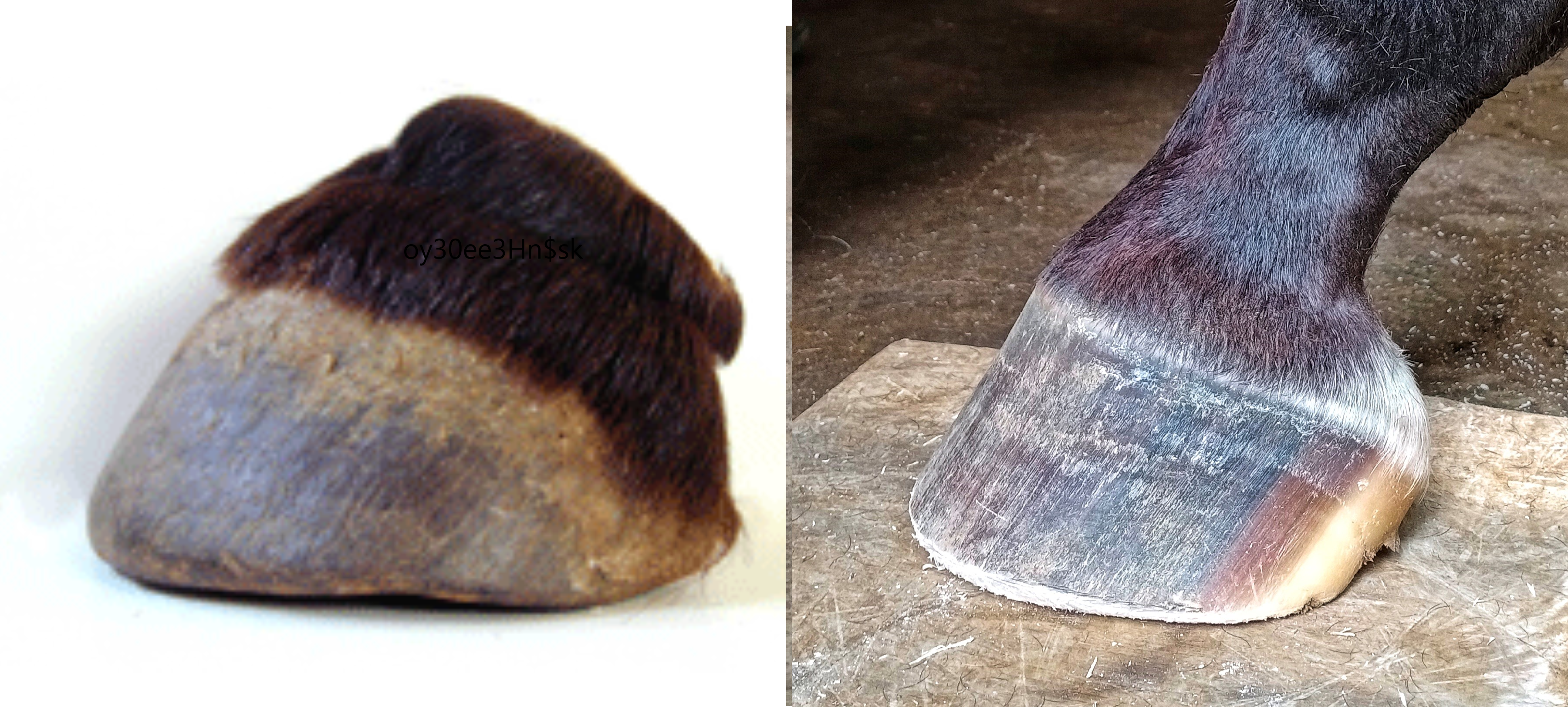
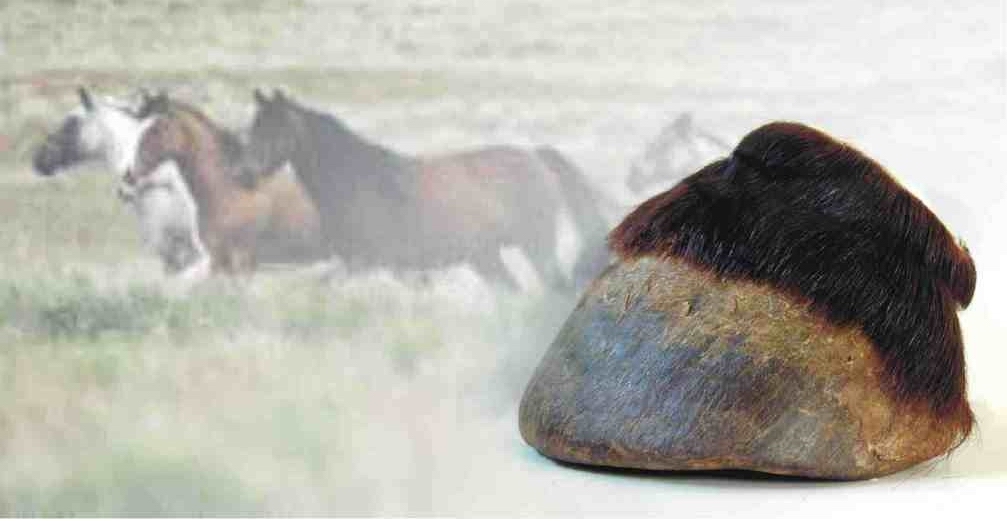
Our domesticated horses, however, do not go 20 to 50 kilometers a day over the planes in America. Our horses sometimes stand in mud, they sometimes get more and sometimes get less exercise. Although we keep our horses out 24/7, we are lucky if they move 10-15 kilometers a day. Therefore, their hoofs cannot be compared with the wild mustang hoofs. Below you see a mustang hoof on the left and on the right a healthy, functional domestic hoof trimmed with the Apex barefoot trim. It has a strong heel buttress, good sole depth, and no cracks or flares in the hoof wall.
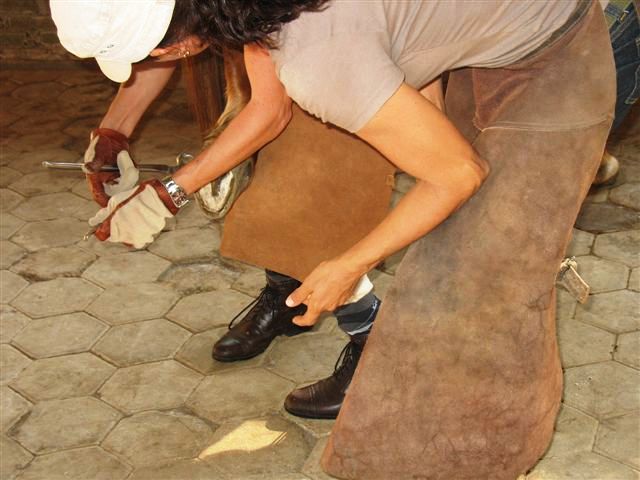
Many barefoot trimming methods use the wild hoof as a model. However, we must look at each hoof individually and cannot put a model on them. Methods that use measurements or numbers to map a hoof, cannot work for each individual and unique hoof! Also, when trimming, we should take into account the living conditions, footing, changeable weather conditions, and feeding. As domestic horses usually do not have the necessity and opportunity to walk over long distances, we imitate natural wear by trimming the hoofs regularly (approx. every 2 weeks) to help them keeping their natural shape. At Havana Horses we trim using the Apex Trim Method developed by Lana Comeriato (USA). With the Apex barefoot trim we build strong heels, which is very important as horses are heel-landing, and a well developed digital cushion.
Lack of digital cushion is a big problem for horses that have been over lowered in the heels and/or shod for a longer time. A big, plump digital cushion and heel bulbs provide a spring and cushion for the horse with every step. We create buttress height so the digital cushion has room. Too low heels compress the digital cushion, the frog and heel bulbs and make the horse sore. A tight lamina connection between hoof wall and hoof bone is key for a sound horse.
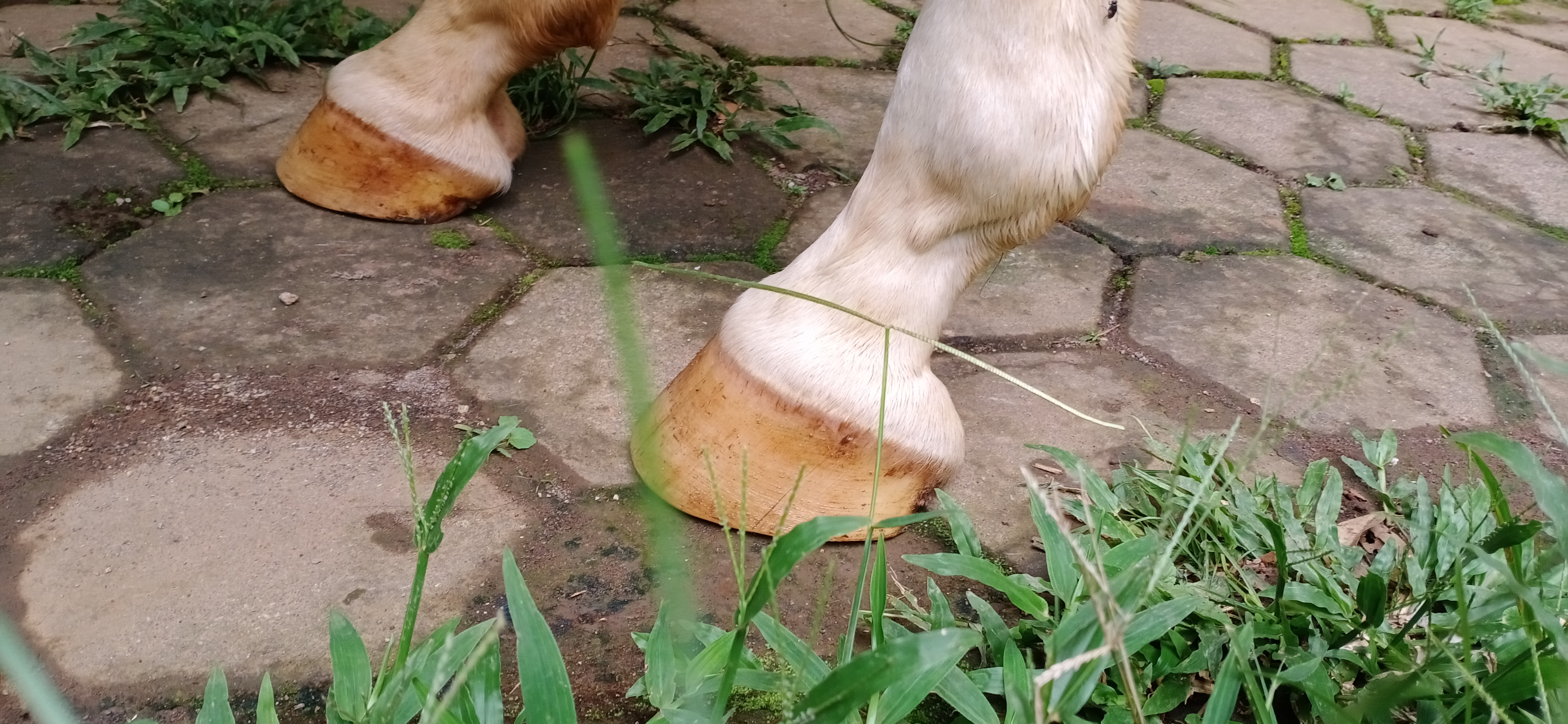
All our horses go barefoot. Some of our horses have come from quite challenging backgrounds as they were shod and stabled before, and some had fairly severe hoof issues when they came to Havana Horses, but are either in excellent shape or are well on their way now, rehabbing with the Apex trim method.
Natural Lifestyle
What is important in natural hoof care is that it extends to the complete lifestyle of the horse. This lifestyle includes: 1. Natural living conditions: this means freedom of movement (no box-stall confinement) - optimally living in a pasture or paddock for 24 hours a day/7 days a week in the company of other horses. Horse clothing (bandages, wraps, blankets, etc) is to be avoided. 2. Exercise: besides roaming and playing, the horse needs to be trained as much as possible, hand-walked over hard surfaces, longed and ridden, aiming for the natural amount of movement of a minimum of 15 kilometers per day. 3. Nutrition: mature grass and hay form the main food of horses. For extra stamina or weight gain, we can feed some pellets, but no more than two handfuls a day as pellets contain unwanted ingredients, like molasses. By feeding as natural as possible and trimming regularly, the barefoot hoofs become strong, healthy, and fully functioning, and the entire immune system of the horse is strengthened naturally.
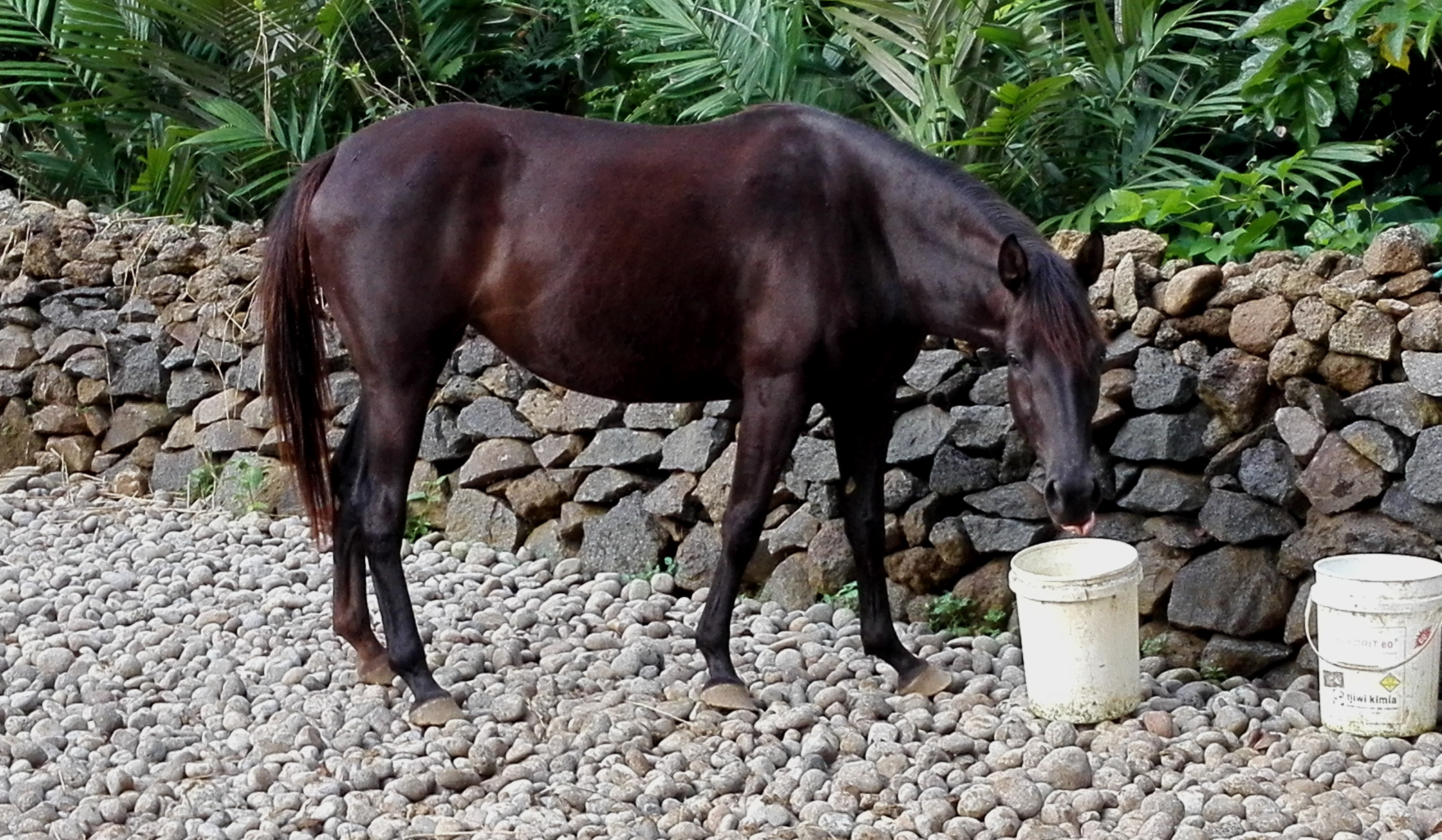
The paddocks at Havana Horses are not square even fields with lush grass, but instead provide a variety of footing, from hard rocks and gravel to mud on an uneven terrain where the horses move up and down rather steep hills. After all, the surfaces that you want your horse to go on when you take it out on the trail, is the same footing that the horse should be used to walk on in its paddock on a daily basis! By providing shelter, food and water at different distant locations throughout the paddock, we make sure the horses move about. On top of this, at the ‘watering hole’ where the horses come at least three times a day, we have made a footing in accordance with Xenophon’s valuable advice in The Art of Horsemanship:
This place (...) would be best suited in the purpose of strengthening the horse’s feet if you threw down loosely four or five cartloads of round stones, each big enough to fill your hand. (...) Stones threwn about in this way strengthen the frogs too (p. 28-29).
Hoof Mechanism
The hoof mechanism can be defined as the natural expanding or spreading of the hoof as it undergoes weight bearing during the hoof’s support phase, and, the reciprocal contracting of the hoof as it unloads during its flight phase. This mechanism pumps the blood around the hoof and is thus essential for blood circulation, not only in the hoofs and legs, but in the end also throughout the horse’s body. A barefoot hoof is capable of flexing as needed depending on the terrain. The frog and heel bulbs perform an important role in absorbing shock. The lateral cartilages and digital cushion move blood through the foot and actually upward into the heart. All these functions are compromised when a horse is shod. The use of horse shoes and/or confinement causes diminished or hindered blood flow and impacts the hoofs and the general wellbeing of the horse in various harmful ways.
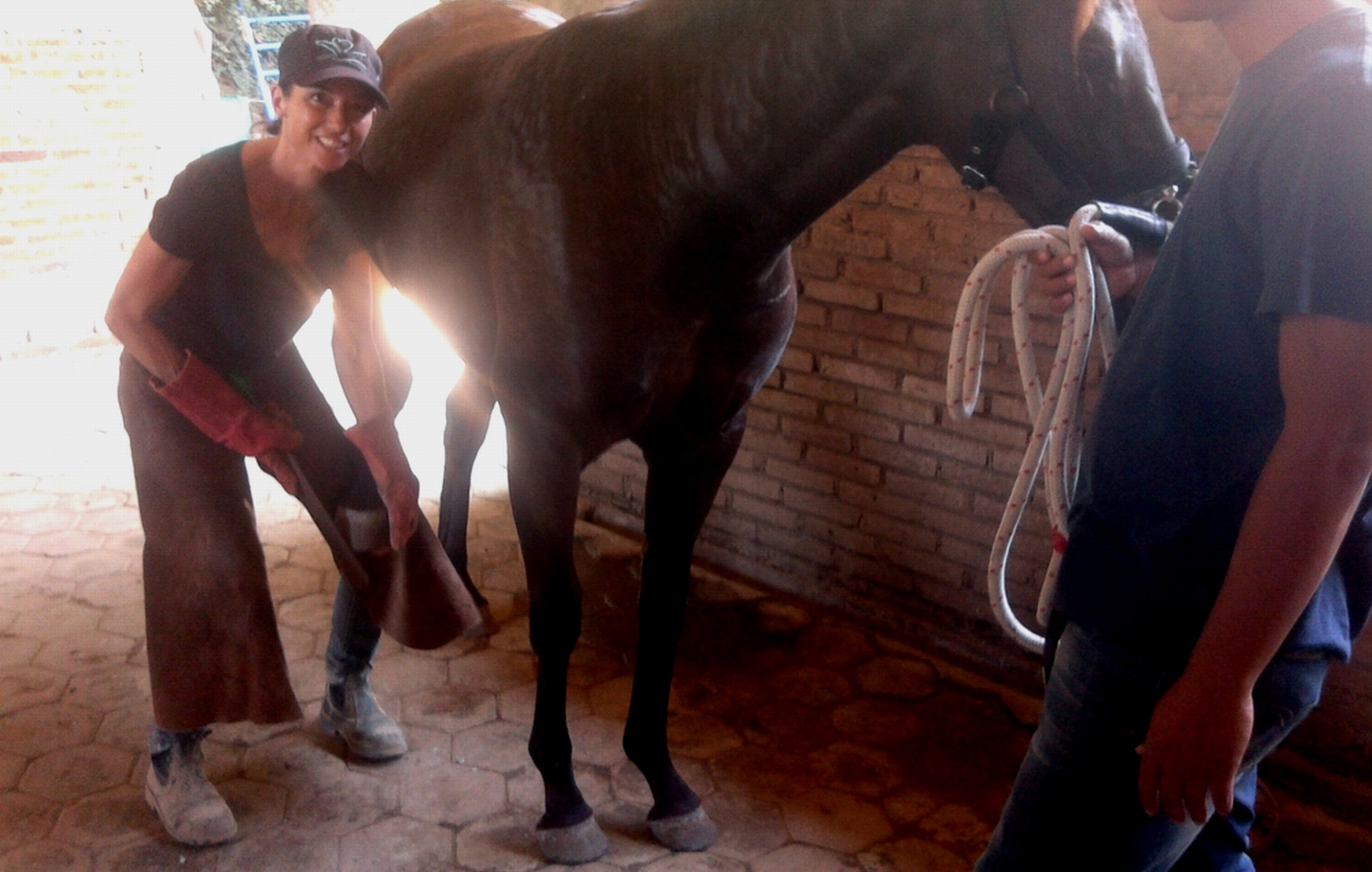
Anna van Rheeden has studied natural horse and hoof care in the Netherlands. After being certified in 2005 as a natural hoof care practitioner she has been trimming all of Havana Horses' and many other horses. As the field of barefoot trimming is always developing, we keep updating our knowledge by studying and following courses. In 2020 Anna got certified for the Apex Trim Method. With this trimming method, developed by Lana Comeriato (USA), all horses become sound on their feet. Havedz & Anna are available for a visit at your stable for advice and a trim. Contact us for an appointment.
Course Barefoot Trimming
Havana Horses offers a 3-Day Course Barefoot Trimming - of 3 full days or 6 half days. The Course is suitable for horse owners, grooms, farriers, or just anybody wanting to know more about the anatomy, functioning and trimming of hoofs the natural way:
- Anatomy of the hoof.
- Function of the hoof: the hoof mechanism.
- How to make the transition to barefoot.
- Natural lifestyle: living conditions, exercise and nutrition.
- Trimming: tools, theory, the Apex trim method, and practice.
- Recognize the parts of the hoof in all its different shapes.
- Practice, practice, practice on the hoofs of Havana Horses and/or your own horses.
After following this course you feel knowledgeable, practiced and confident enough to trim the hoofs of your own horse!
There are many benefits to keeping your horse barefoot, including:
- Improved blood flow by an optimal working hoof mechanism, which improves horse's overall health.
- Healthy, smooth, strong hoof walls.
- Greater shock absorption so fewer concussion related injuries.
- Quicker heart rate recovery time after exercise.
- No more worrying about shoes coming off during a ride/event.
- A much lower risk of injuries when playing in the field.
- Improved traction - nature designed the hoof so it can adapt to all terrains.
- Less tripping, stumbling and forging as the horse can feel where its feet are.
- In short: a sure-footed, healthy and happy horse!
Download our Leaflet Natural Hoof Care (pdf) here.
For prices of today see here.